

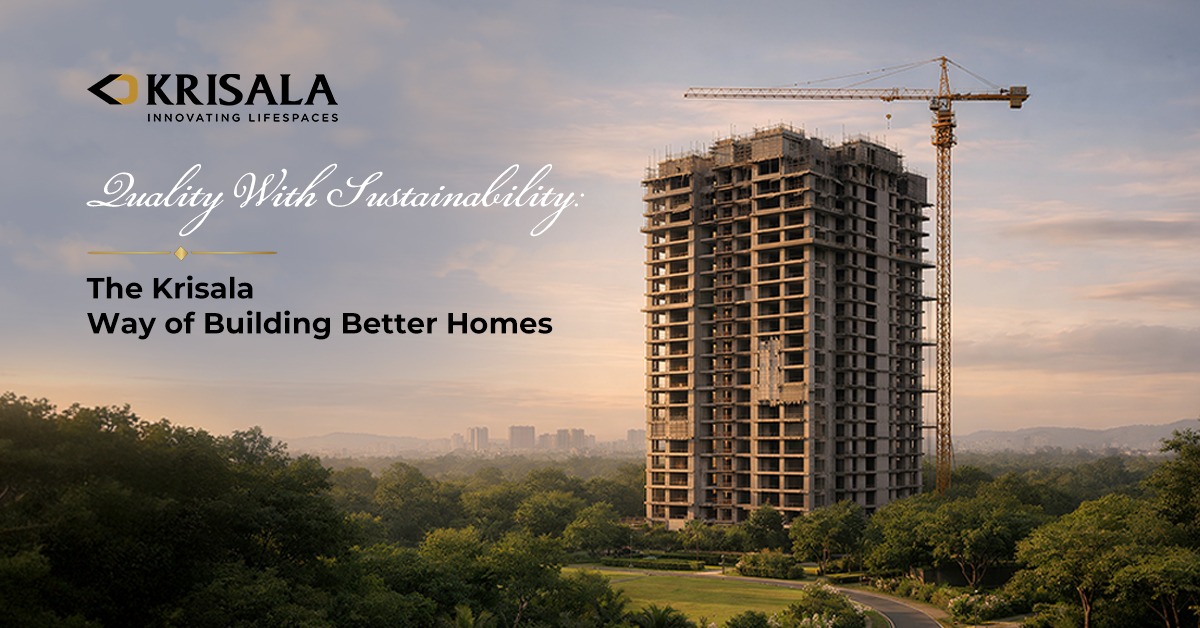
Quality With Sustainability: The Krisala Way of Building Better Homes
Introduction
Homebuyers today are more informed than ever. Beyond location and layout, there is growing awareness around how a home is built, how long it will last, and how responsibly it uses natural resources. Quality and sustainability are no longer separate ideas in modern housing. They are closely connected with long-term value, everyday comfort, and responsible urban growth
In a city like Pune, where residential development continues to expand across established and emerging corridors, the way homes are planned and constructed has a direct impact on both individual living experiences and the larger environment. This is where a balanced approach to quality and sustainability becomes essential. Krisala’s development philosophy reflects this evolving expectation, focusing on building homes that remain relevant, resilient, and responsible over time.
What Quality Means in Real Estate Today
Quality in real estate goes far beyond visible finishes or premium fittings. It begins at the planning stage and continues through every phase of construction. Factors such as structural design, material selection, execution standards, site supervision, and safety protocols all contribute to the true quality of a residential project.
Well-built homes tend to age better. They require fewer structural repairs, offer better resistance to wear and tear, and provide a more consistent living experience for residents. Construction quality also plays a significant role in long-term maintenance costs, resale potential, and overall housing demand. In markets like Pune, where buyers often think in terms of long-term occupancy or investment, quality construction becomes a foundational requirement rather than a differentiator.
Understanding Sustainability in Housing
Sustainability in residential development refers to building homes that use resources efficiently while minimizing environmental impact over their lifecycle. This includes thoughtful land use, energy-efficient design, water conservation, waste management, and the integration of green spaces.
For homebuyers, sustainable homes are not about complex technologies or certifications alone. They are about better airflow, adequate natural light, efficient water usage, and surroundings that promote healthier living. Sustainable housing also supports community well-being by reducing strain on local infrastructure and contributing to more balanced urban growth.
When sustainability is integrated effectively, it aligns closely with comfort, cost efficiency, and future readiness.
The Krisala Philosophy: Quality With Sustainability
Krisala approaches real estate development with the understanding that quality and sustainability must work together. The focus is on disciplined planning, responsible land use, and construction practices that stand the test of time.
Rather than building for short-term delivery milestones, Krisala emphasizes long-term performance. This means careful attention to site planning, structural integrity, and materials that are chosen for durability and efficiency. Sustainability is integrated as part of the development process, not added as an afterthought.
This philosophy reflects a commitment to building homes that remain functional and relevant for decades. It positions Krisala as a developer focused on responsible growth within Pune’s evolving real estate landscape.
Sustainable Practices at Krisala Projects
Across its residential developments, Krisala incorporates practical design and planning choices that support sustainable living. Efficient layouts help optimize usable space while reducing unnecessary material consumption. Building orientation and window placement are planned to enhance natural light and cross ventilation, improving indoor comfort and reducing dependence on artificial lighting during the day.
Water management is addressed through systems that support responsible usage and recharge, helping reduce long-term strain on local resources. Landscaped green areas are planned to improve the local environment within the project and create healthier living spaces for residents.
Durability is another key aspect of sustainability. Homes built with long-lasting materials and sound construction practices reduce the need for frequent repairs or replacements, which in turn lowers resource consumption over time.
How This Benefits Homebuyers
For homebuyers, the integration of quality and sustainability offers clear and practical advantages. Well-constructed homes with thoughtful design typically have lower maintenance requirements, saving time and cost over the years.
Improved ventilation, natural light, and efficient layouts contribute to better everyday living comfort. From an investment perspective, homes built with quality construction and sustainable planning tend to retain value more effectively and remain aligned with evolving buyer expectations.
As regulatory standards and environmental awareness continue to shape real estate development in Pune, homes that already follow responsible practices are better positioned for the future.
Conclusion
Quality and sustainability are no longer optional considerations in residential development. They are essential to building homes that offer long-term value, comfort, and relevance. Krisala’s approach reflects this understanding, combining disciplined construction quality with responsible, sustainable planning.
By focusing on how homes are built rather than just how they are sold, Krisala continues to contribute to more thoughtful real estate development in Pune. The result is housing that supports both individual lifestyles and the broader urban environment, today and in the years to come.